


 English
WT9932S3-NANO Feature Introduction
Update history
| Date | Version | Author | Update content |
|---|---|---|---|
| 2026-05-12 | 1.0.1 | Yobie Zhou | Added board images and purchasing links |
| 2025-12-17 | 1.0.0 | Win | Initial document release |
1. Introduction
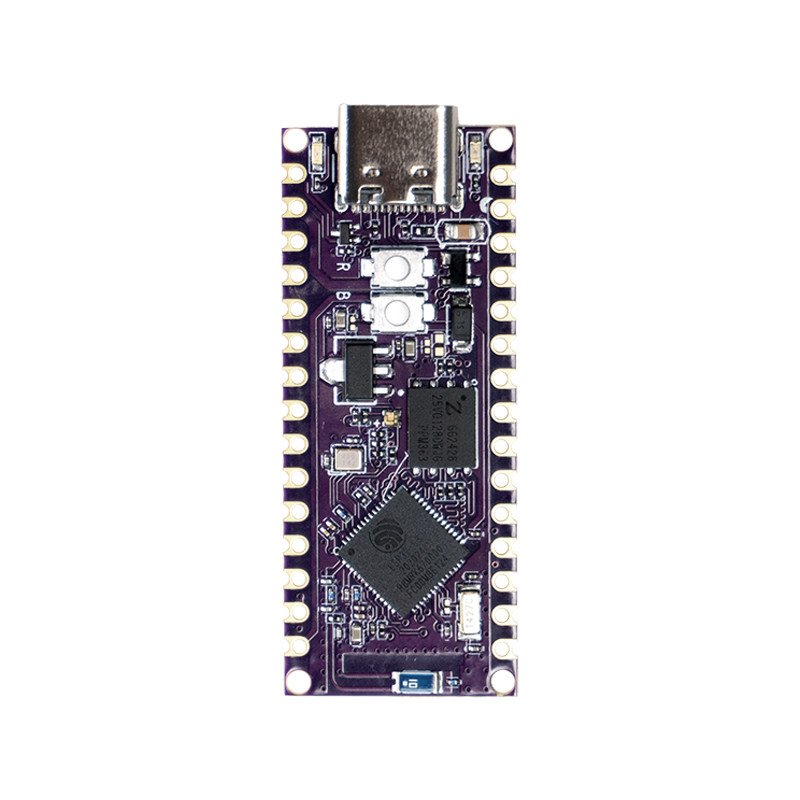
WT9932S3-NANO is an ultra-compact high-performance wireless development board launched by wireless-tag, based on the Espressif ESP32-S3R8 chip and fully compatible with the Arduino Nano ESP32 ecosystem. The main controller adopts a Xtensa® 32-bit LX7 dual-core processor with a maximum clock frequency of 240MHz, integrating 2.4GHz Wi-Fi and Bluetooth LE wireless communication capabilities.
With its small form factor and rich resources, this development board supports both Arduino and MicroPython programming environments. It is suitable for embedding into standalone products or prototypes and is widely used in scenarios such as IoT terminals, intelligent control, USB-HID devices, maker education, and low-power wireless applications, emphasizing ease of use, compatibility, and high integration.
Buy Now: WT9932S3-NANO Development Kit
🔧 Core Hardware Configuration
Main Controller:
Uses the EspressifESP32-S3R8, featuring a built-inXtensa® LX7 dual-core 32-bit processorwith a clock frequency of up to240MHz, providing excellent real-time processing performance.Memory Resources:
384kB ROM512kB SRAM16MB Flash8MB PSRAM
Suitable for running relatively complex application logic as well as graphics and networking tasks.
Wireless Communication:
Integrated2.4GHz Wi-FiandBluetooth LE, offering stable RF performance to meet mainstream IoT wireless connectivity requirements.USB Functionality:
SupportsUSB HIDfunctionality, allowing USB-based emulation ofkeyboards,mice, and other human interface devices, enabling convenient interaction with PCs or host systems.Power Supply:
- Operating voltage:
3.3V - External supply voltage:
5V
SupportsType-Cpower supply, header pin power supply, and castellated pad power supply methods.
- Operating voltage:
🛠️ Design Features
- Ultra-small
Nanoform factor, compatible with theArduino Nano ESP32pin layout, enabling easy migration of existing projects. - Onboard
16MB Flash + 8MB PSRAM, offering a clear resource advantage among boards of the same size. - Supports both
ArduinoandMicroPythonprogramming environments, allowing flexible selection based on project requirements. - Compatible with
Arduino IoT Cloud, enabling rapid construction of cloud-based monitoring and control systems. - Provides
castellated paddesign, allowing direct soldering onto user-defined PCBs, suitable for product-level applications. - Onboard
BOOTandRESETbuttons for a friendly debugging and firmware download experience.
⚙️ Development Advantages
- Fully compatible with
ArduinoandMicroPythondevelopment ecosystems, offering a low learning curve. - Rich memory resources, suitable for applications of moderate complexity.
- Supports
Arduino IoT Cloudfor fast cloud integration. - wireless-tag continuously provides documentation and technical support, making it suitable for long-term project use.
2. Pin Description
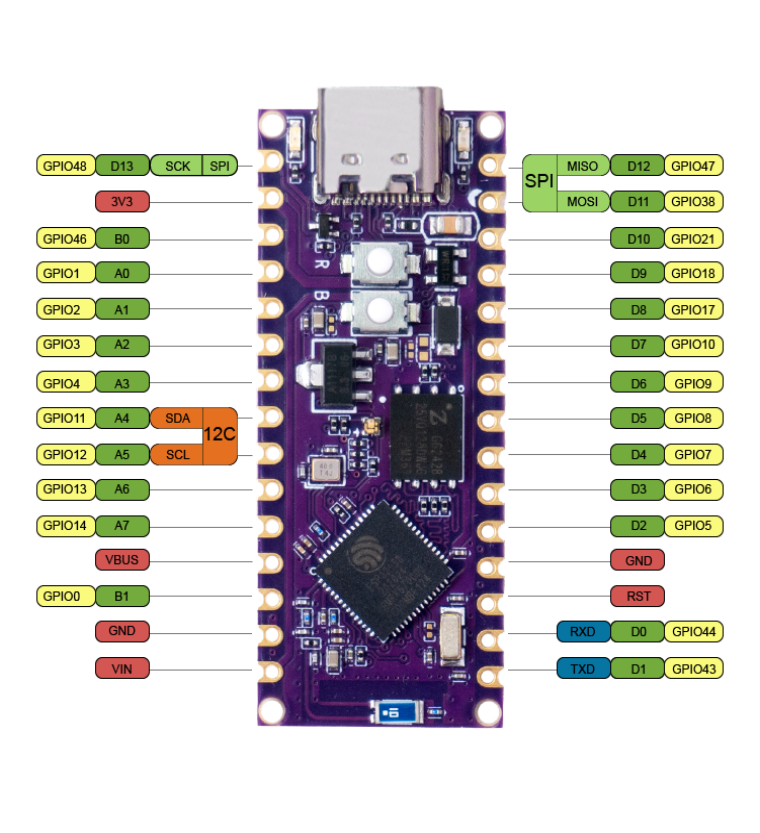
Left Header Pins:
| No. | Pin | Description | Voltage Range | Notes |
|---|---|---|---|---|
| 1 | D13 | GPIO, SPI SCK | 0V/3.3V | GPIO48 in esp-idf |
| 2 | 3.3V | 3.3V power output | 3.3V | |
| 3 | B0 | GPIO | 0V/3.3V | GPIO46 in esp-idf |
| 4 | A0 | GPIO | 0V/3.3V | GPIO1 in esp-idf |
| 5 | A1 | GPIO | 0V/3.3V | GPIO2 in esp-idf |
| 6 | A2 | GPIO | 0V/3.3V | GPIO3 in esp-idf |
| 7 | A3 | GPIO | 0V/3.3V | GPIO4 in esp-idf |
| 8 | A4 | GPIO, I2C SDA | 0V/3.3V | GPIO11 in esp-idf |
| 9 | A5 | GPIO, I2C SCL | 0V/3.3V | GPIO12 in esp-idf |
| 10 | A6 | GPIO | 0V/3.3V | GPIO13 in esp-idf |
| 11 | A7 | GPIO | 0V/3.3V | GPIO14 in esp-idf |
| 12 | VBUS | VBUS power | 5V | |
| 13 | B1 | GPIO | 0V/3.3V | GPIO0 in esp-idf |
| 14 | GND | Ground | 0V | |
| 15 | VIN | External power input | 5V |
Right Header Pins:
| No. | Pin | Description | Voltage Range | Notes |
|---|---|---|---|---|
| 1 | D12 | GPIO, SPI MISO | 0V/3.3V | GPIO47 in esp-idf |
| 2 | D11 | GPIO, SPI MOSI | 0V/3.3V | GPIO38 in esp-idf |
| 3 | D10 | GPIO | 0V/3.3V | GPIO21 in esp-idf |
| 4 | D9 | GPIO | 0V/3.3V | GPIO18 in esp-idf |
| 5 | D8 | GPIO | 0V/3.3V | GPIO17 in esp-idf |
| 6 | D7 | GPIO | 0V/3.3V | GPIO10 in esp-idf |
| 7 | D6 | GPIO | 0V/3.3V | GPIO9 in esp-idf |
| 8 | D5 | GPIO | 0V/3.3V | GPIO8 in esp-idf |
| 9 | D4 | GPIO | 0V/3.3V | GPIO7 in esp-idf |
| 10 | D3 | GPIO | 0V/3.3V | GPIO6 in esp-idf |
| 11 | D2 | GPIO | 0V/3.3V | GPIO5 in esp-idf |
| 12 | GND | Ground | 0V | |
| 13 | RST | Reset pin | 0V/3.3V | |
| 14 | D0 | GPIO, RXD | 0V/3.3V | GPIO44 in esp-idf |
| 15 | D1 | GPIO, TXD | 0V/3.3V | GPIO43 in esp-idf |
Power Characteristics
You may choose one of the following power supply methods to power the WT9932S3-NANO series development boards:
- Supply power via the
VINinput pin using Dupont wires with the corresponding voltage; - Supply power via the
VBUSpin using Dupont wires with the corresponding voltage; - Supply power externally through the
Type-Cconnector.